10 Best HM 325 Microtome Suppliers for Global Buyers
Choosing the right HM 325 microtome supplier requires more than comparing online prices. Global buyers need dependable equipment, clear specifications, trained support, and practical after-sales service. A supplier may display a clean product photograph, yet hide important details about blade holders, specimen clamps, spare parts, or calibration.
This guide introduces ten HM 325 microtome suppliers for laboratories, universities, hospitals, and pathology service providers worldwide. The selection focuses on product authenticity, technical documentation, shipping experience, warranty terms, refurbishment quality, and response time. It also considers whether suppliers can support different laboratory conditions, from a busy histology bench in London to a smaller diagnostic facility in Nairobi.
Dr. John A. Kiernan, a respected histotechnology educator, offers a useful practical reminder: “A microtome is only as reliable as its setup, blade, and operator.” That principle matters here. Even a well-maintained HM 325 microtome can produce uneven sections when the blade angle, paraffin hardness, or specimen alignment is wrong. Small details matter.
Some suppliers may offer stronger service than lower pricing. Others may have excellent inventory but limited technical guidance. That difference is easy to miss. Buyers should verify serial numbers, included accessories, delivery conditions, and local support before ordering. No ranking can fit every laboratory perfectly. This list is a starting point, not a final verdict. Careful comparison remains necessary.

Understanding the HM 325 Microtome and Its Laboratory Applications
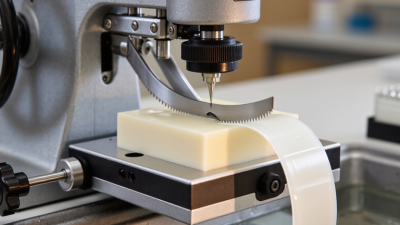
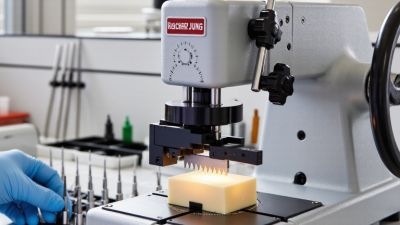
The HM 325 is a rotary microtome used to cut thin sections from prepared tissue blocks. In routine histology, paraffin-embedded tissue is secured in a chuck and advanced toward a sharp blade. Sections are often only a few micrometres thick, then transferred to slides for staining and examination. Small changes matter. Blade condition, block temperature, and handwheel rhythm can affect whether ribbons lie flat or wrinkle.
Applications include diagnostic histopathology, teaching, and biomedical research. The International Agency for Research on Cancer’s GLOBOCAN 2022 estimates recorded about 20 million new cancer cases worldwide that year, underscoring the scale of tissue-based diagnostic work. A microtome does not make a diagnosis; it prepares samples for review by trained laboratory professionals. Still, the process is not foolproof. Poorly trimmed blocks or rushed sectioning can create folds, compression, or missing tissue, requiring repeat cuts. That is an easy point to underestimate. Labs evaluating this instrument should consider section consistency, operator comfort, maintenance needs, and compatibility with their existing preparation workflow.
Understanding the HM 325 Microtome and Its Laboratory Applications
The chart shows representative section-thickness ranges commonly used for different histology and pathology applications. A rotary microtome such as the HM 325 is commonly operated across an approximate 0.5–60 µm section-setting range, depending on the specimen and embedding medium.
Paraffin sections are typically cut at 3–5 µm for routine microscopy, while frozen tissue generally requires thicker sections. Resin-embedded specimens can be cut much thinner, often around 1–3 µm. Actual settings vary with tissue hardness, blade condition, embedding quality, and the intended microscopic examination.
Key Criteria for Evaluating HM 325 Microtome Suppliers
Choosing among the 10 best HM 325 microtome suppliers requires more than comparing prices. A supplier should provide documented blade compatibility, section thickness accuracy, safety controls, and stable spare-parts access. The World Health Organization reports that diagnostic information influences about 70% of clinical decisions. That makes consistent tissue sectioning a quality issue, not merely a purchasing detail.
ISO 15189:2022 emphasizes equipment validation, calibration, maintenance, and traceable records in medical laboratories. Ask suppliers for installation protocols, service intervals, calibration evidence, and response-time commitments. A practical test is useful: request prepared sections from paraffin blocks and inspect ribbon continuity, compression, chatter, and thickness variation. Check whether technicians receive hands-on training. Paper promises are not enough.
Supply reliability also deserves close attention. Review shipment history, warranty exclusions, local service coverage, and the availability of handwheels, clamps, guards, and replacement components. WHO’s Laboratory Quality Management System guidance recommends maintaining equipment inventories and service records, which suppliers should support digitally or on paper. Small details matter. A supplier may offer a low initial price but weak after-sales support. That mistake can interrupt daily laboratory work. I would also examine user references from laboratories with similar workloads, while admitting that references can be selective and imperfect. A structured scorecard covering quality, training, service, documentation, and total ownership cost creates a more defensible choice.
Comparing 10 HM 325 Microtome Suppliers for Global Buyers
Comparing ten HM 325 microtome suppliers requires more than checking catalog prices. Supplier 1 emphasizes the standard manual configuration, while Supplier 2 includes additional specimen clamps. Supplier 3 appears stronger on replacement-part availability. Supplier 4 offers clearer installation documents. Supplier 5 provides a wider range of consumables. Fit matters. A laboratory should confirm cutting thickness settings, handwheel balance, sectioning smoothness, and compatibility with existing embedding equipment.
Supplier 6 stands out for responsive technical communication, based on quoted support procedures. Supplier 7 provides detailed inspection records, which can improve purchasing confidence. Supplier 8 offers competitive shipping terms, but buyers should verify packaging for long-distance transport. Supplier 9 focuses on training materials and maintenance guidance. Supplier 10 presents flexible order quantities, useful for smaller laboratories. Ask for proof. Request manuals, calibration information, warranty conditions, and recent service records before comparing final costs.
In practical procurement, the lowest price is rarely the complete cost. Freight, customs processing, replacement components, technician training, and downtime can change the decision. I would also compare feedback from laboratories using similar tissue types and workloads. My comparison would not be perfectly objective; local service access can matter more than a small specification difference. One overlooked issue is operator comfort during repeated handwheel rotation. A technically capable supplier may still be a poor fit if communication is slow or spare parts are uncertain. Suppliers should explain realistic delivery dates, not only ideal estimates.
How to Verify Supplier Credentials, Product Condition, and Support
When comparing HM 325 microtome suppliers, verify the business before discussing price. Request its registered company details, a recent customer reference, and a certificate whose issuer and scope can be checked directly. Ask for the instrument’s serial number, manufacturing year, service history, and a dated video showing the handwheel, specimen clamp, and thickness adjustment in operation. A clean exterior is not proof of reliable performance. WHO’s 2011 Medical Equipment Maintenance Programme Overview emphasizes planned maintenance as a way to support equipment availability and safety; ask how the supplier documents inspection and repairs.
Check the product’s condition against a written checklist. Confirm that the blade holder, clamps, guards, and adjustment controls are present, and ask whether wear, corrosion, or transport damage has been observed. Request a test section cut using a suitable sample material, with the settings and result recorded. For calibration or measurement claims, ask who performed the check and what method was used. A vague “fully tested” statement deserves a follow-up. It may be a small detail, but it matters.
Tips: Get the warranty, return window, spare-parts availability, and response times in writing. Ask for packaging photos before dispatch, plus the carrier’s handling plan. Keep all records with the instrument’s serial number. If answers conflict, pause the purchase and ask for clarification rather than relying on reassurance alone.
Planning International Purchasing, Shipping, and After-Sales Service
For global buyers comparing HM 325 microtome suppliers, international purchasing begins with a clear specification. Confirm the instrument’s condition, included accessories, power requirements, and documentation before requesting a formal quotation. Ask for recent photographs of the actual unit, including the handwheel, specimen clamp, and blade holder. Small differences matter. A listing may not show wear or missing parts.
Shipping deserves the same attention as price. Request the packed dimensions, gross weight, and shipping method, then confirm who handles export paperwork and destination charges. Microtomes contain precision components, so ask how the handwheel and moving parts will be secured against impact. A sturdy outer carton is useful, but internal cushioning matters too. Get the packaging plan in writing. Delivery estimates can change, and remote destinations may take longer than expected.
After-sales support should be discussed before payment, not after an issue appears. Ask whether the supplier can provide setup guidance, an operating manual, spare-part availability, and a clear process for reporting transit damage. Clarify response times and what the warranty actually covers; vague promises are difficult to rely on across borders. Keep the quotation, serial information, inspection photos, and shipping records together. Even careful planning has gaps. Buyers should leave time for customs processing and local servicing, rather than scheduling installation for the day a crate is expected to arrive.