
How to Source Nasal Opening Strips in 2026

In 2026, sourcing Nasal Opening Strips means checking more than unit price. Buyers need consistent adhesive performance, comfortable materials, reliable packaging, and clear quality records. A strip may look simple on a sample card. Its real performance can change with skin type, humidity, or how it is applied. That is easy to overlook.

Supply conditions matter, too. UNCTAD’s Review of Maritime Transport 2024 reported that global maritime trade grew 2.4% in 2023 and projected growth of 2.7% in 2024. Those figures do not predict the cost of a specific shipment, but they show why lead times and freight assumptions deserve careful review. A low factory quote is less useful if cartons arrive late or specifications drift between batches.

A practical sourcing process starts with written requirements: strip dimensions, material composition, adhesive details, packaging format, and acceptable defect limits. Request samples from shortlisted suppliers, then assess fit and adhesion under realistic conditions. Ask how production lots are traced and how changes are approved. Small checks matter.

Claims matter, too. Avoid treating a supplier’s marketing language as proof of a health benefit. Review product documentation, labeling, and applicable market requirements with qualified specialists. No checklist catches everything. A sample test can miss a production problem, so retain inspection records and revisit supplier performance after launch. This guide explains how to compare manufacturers, verify quality, and build a sourcing plan for 2026 without mistaking a polished sample for dependable supply.
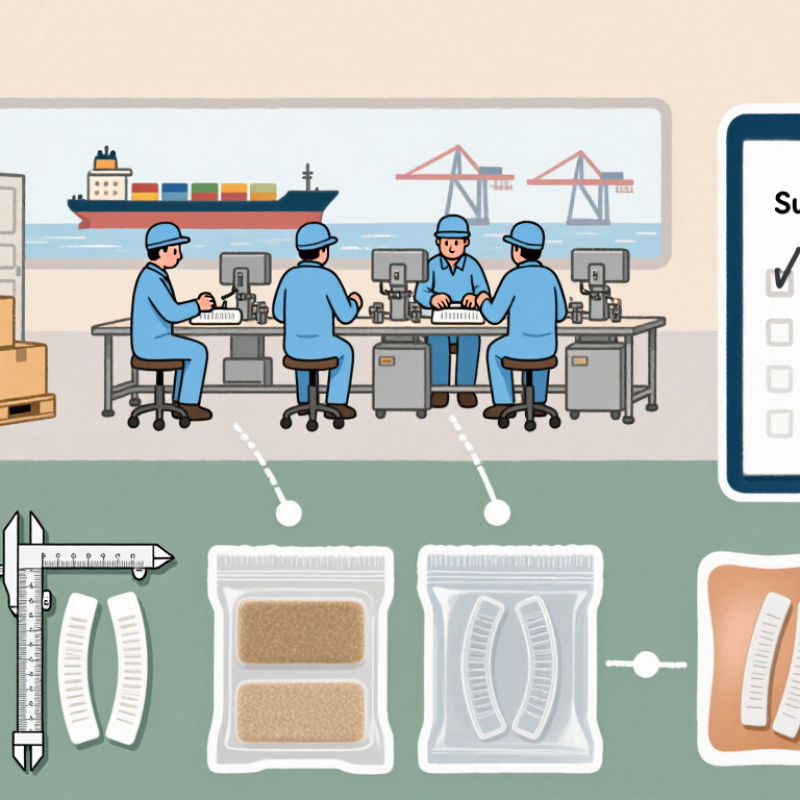
How to Source Nasal Opening Strips in 2026

Define Nasal Opening Strip Types, Uses, and Key Specifications

How to Source Nasal Opening Strips in 2026

Define Nasal Opening Strip Types, Uses, and Key Specifications

Nasal opening strips generally fall into two groups: external adhesive strips and internal nasal dilators. External strips use a flexible band to gently lift the sides of the nose. Internal versions sit inside the nostrils and come in different shapes and sizes. They are not interchangeable, so define the intended user and use before requesting samples. These products may help some people feel less nasal airflow resistance, but they do not treat underlying conditions. Keep claims modest and supported by suitable product evidence.

Compare strip length, width, spring force, backing material, and adhesive type. Ask suppliers for material disclosures, test reports, batch traceability, and clear instructions for application and removal. Skin-contact comfort matters. So does reliable adhesion during normal use. Check whether sample strips stay in place without leaving noticeable residue, and review packaging for storage guidance and warnings. One detail is easy to overlook: a strong adhesive is not automatically a better one. Fit and comfort vary between users.

Tips: Request samples in several sizes. Test them on clean, dry skin, and record fit, comfort, and removal experience. Don’t rely on a single tester.

Identify Qualified Manufacturers and Wholesale Suppliers

When sourcing nasal opening strips in 2026, look beyond a polished catalog. Ask manufacturers how they control strip width, spring tension, and adhesive coating. A sample should sit flat, flex consistently, and peel away without leaving visible residue. Check the backing paper, pouch seal, and printed lot code, too. Small details matter.

Request current quality-system documents, material specifications, and test reports tied to the exact product—not a similar model. Confirm who makes the adhesive and whether material changes are disclosed before production. Ask for batch traceability and written procedures for handling defects. If the strips are marketed with health-related claims, have qualified regulatory staff review the intended wording and applicable market requirements. A supplier’s confident answer is not evidence. Ask for records. Consider an independent inspection before a large order, especially when the factory is new to you. I have seen sourcing plans lean too heavily on a low quote; that can hide costly limits on customization, packaging, or production capacity. Compare minimum order quantities, lead times, payment terms, and sample costs in writing. A clear supplier may still make mistakes, so keep approval samples and document what you accepted.

How to Source Nasal Opening Strips in 2026 - Identify Qualified Manufacturers and Wholesale Suppliers

Sourcing Dimension What to Verify Evidence to Request Buyer Action
Product construction Confirm the strip’s layers, backing material, spring element, adhesive type, dimensions, and intended use. Nasal strips work by mechanically pulling the sides of the nose outward. Technical data sheet, material declarations, drawings, and a sample from the proposed production specification. Compare samples for fit, flexibility, edge finish, and consistency. Confirm that the production version matches the approved sample.
Adhesive and skin contact Check adhesion during the intended wear period and whether removal causes unacceptable discomfort or residue. Skin compatibility depends on the formulation and use conditions. Adhesive specification, relevant skin-contact safety assessment, test methods, and results for adhesion and removal. Evaluate samples with intended users and follow applicable safety and ethical practices. Do not rely on unsupported “hypoallergenic” claims.
Quality management Assess documented production controls, incoming-material checks, in-process inspections, final release procedures, and corrective-action processes. Quality-system certificate, if applicable, plus its scope, issuing body, validity, and site coverage; sample inspection and audit records. Verify certificates with the issuer and confirm they cover the actual manufacturing site and relevant activities. A certificate alone does not establish product compliance.
Product testing and consistency Confirm that test methods address the product’s key characteristics, such as dimensions, adhesive performance, backing integrity, and performance after storage. Test protocols, dated reports, acceptance criteria, equipment calibration records, and batch inspection results. Agree on written specifications and sampling rules before ordering. Require notification and approval for material or process changes.
Regulatory and claims review Classification, registration, labeling, and evidence requirements vary by market and by product claims. Avoid treating a general compliance statement as universal approval. Market-specific regulatory documents, product labeling, claim substantiation, and written details of the supplier’s regulatory responsibilities. Check requirements with qualified regulatory counsel or the relevant authority in each target market before importing or making health claims.
Packaging and traceability Review individual wrapping, carton protection, storage instructions, lot identification, and any applicable date or shelf-life information. Packaging specifications, artwork proofs, lot-code format, traceability procedure, and supporting shelf-life or stability data where claimed. Approve final artwork and packaging samples. Confirm that a finished unit can be traced to its production batch and relevant material records.
Wholesale terms and capacity Compare quoted minimum order quantity, production lead time, monthly capacity, payment terms, shipping terms, and available packing formats. These terms vary by supplier and order. A dated quotation, capacity statement, production schedule, packaging breakdown, and written terms for samples, tooling, and repeat orders. Request comparable quotations using the same product specification, quantity, packaging, destination, and delivery terms.
Supplier verification Confirm the legal business identity, manufacturing location, production capability, subcontracting arrangements, and ownership of relevant technical documentation. Business registration details, site address, facility information, references where available, and disclosure of outsourced processes. Verify records independently, conduct a site or remote assessment where appropriate, and specify subcontractor approval requirements in the contract.
Contract and incoming inspection Define product specifications, defect handling, inspection rights, change control, delivery obligations, and remedies for nonconforming goods. Signed product specification, quality agreement, purchase terms, inspection checklist, and documented complaint or recall process. Use a pre-shipment inspection plan and retain samples and batch documents. Have legal and regulatory obligations reviewed for the destination market.

Note: Supplier capabilities, commercial terms, and regulatory obligations should be verified for the specific product, manufacturing site, order, and destination market.

Verify Safety, Quality Standards, and Regulatory Requirements

When sourcing nasal opening strips in 2026, assess the product as a skin-contact item, not just a shaped spring with adhesive. Request material specifications, adhesive composition, and documented testing for skin irritation and performance. Ask how the strip behaves after several hours of wear and whether removal can cause discomfort. A neat sample is not enough. Test samples from production lots, too.

Quality evidence should be specific and current. Review the manufacturer’s quality-system certificates, and confirm their scope and validity with the issuing body. ISO 13485 may be relevant when the product falls within medical-device requirements, but a certificate alone does not prove every strip is safe. Request lot traceability, inspection records, change-control procedures, and a process for handling complaints or recalls. Check packaging seals and instructions for clear wear and removal guidance.

Regulatory obligations depend on the intended use, claims, and destination market. Ask a qualified local regulatory professional to confirm classification, registration or listing, labeling, and importer responsibilities before placing an order. Keep supplier declarations and test reports on file, and verify that they match the exact materials and factory being used. One detail is easy to miss: production changes can make old test reports less useful. I would not rely on verbal assurances alone.

Compare Samples, Pricing, Minimum Orders, and Lead Times

How to Source Nasal Opening Strips in 2026

Compare like with like. Request samples in the intended size, material, adhesive, and packaging, then check edge lift after handling and wear. A sample that looks neat on a desk may behave differently on skin. Ask for the adhesive specification and test method; otherwise, quoted performance figures are hard to compare. For pricing, separate unit cost from setup, packaging, freight, and inspection charges. Get quotes at several order volumes, and confirm whether the minimum order applies per size or per design. Ask suppliers to state sample, production, and shipping lead times separately.

Build in slack. McKinsey Global Institute’s 2020 report, Risk, resilience, and rebalancing in global value chains, found that 93% of surveyed supply-chain leaders planned to make their chains more resilient. That finding is not specific to nasal strips, but it supports checking backup capacity and realistic delivery windows. Request dated quotes, a written MOQ, and a timeline for sample approval, production, and dispatch. A low price is less useful if a small packaging revision resets the schedule.

Tips: Keep one comparison sheet. Record sample notes, landed cost, MOQ, and lead-time assumptions. Ask what could change the quote. Recheck the details before approving a purchase order; small gaps do happen.

How to Source Nasal Opening Strips in 2026

Illustrative RFQ planning bands for comparing samples, minimum orders, and production lead times

Sample set cost

Planning band: $25–$75 per evaluation set

Minimum order quantity

Planning band: 500–3,000 pairs

Production lead time

Planning band: 30–60 calendar days

These are illustrative buyer-set planning bands, not verified market averages or supplier quotes. Nasal-strip sample pricing, MOQs, and lead times vary by design, materials, customization, and order terms. Request dated quotes and confirm whether lead times start after approval of samples or artwork.

Finalize Supplier Terms and Plan Ongoing Quality Checks

When sourcing nasal opening strips, treat supplier terms as part of product quality, not paperwork. Define strip width, length, backing material, adhesive behavior, and packaging before approving a production run. Request a signed specification with tolerances, plus a dated sample that both parties retain. Small differences matter. A strip that lifts at the edges can frustrate users, even when its appearance seems acceptable.

Set terms for minimum order quantities, lead times, payment milestones, and remedies for late or rejected lots. Name the inspection method and agree on defect thresholds in writing. Ask the supplier to identify material changes before production, not after cartons arrive. Keep batch records and retain samples from each shipment. This sounds fussy. It is cheaper than guessing later.

Build a check schedule around incoming goods and periodic production reviews. Inspect dimensions, adhesive placement, backing release, seal integrity, and print legibility using the same checklist each time. For a small lot, inspect every unit if practical; for larger lots, use a documented sampling plan. Record findings with photos, dates, and lot codes, then track repeat defects. A supplier may pass one inspection and drift later. Revisit the criteria when complaints, returns, or process changes appear, and avoid changing acceptance rules mid-order.

preloader