Exploring the Benefits of the Leica VT1000 S Vibrating Blade Microtome?
The field of histology continues to evolve, with innovations that enhance precision in specimen preparation. The Leica VT1000 S Vibrating Blade Microtome exemplifies this progress. Its advanced design allows for smoother and more consistent tissue sections. Studies indicate that a significant percentage of pathology errors stem from inadequate specimen preparation, emphasizing the need for reliable tools.
Incorporating the Leica VT1000 S into laboratory workflows can directly impact the quality of histological analysis. According to the Journal of Histotechnology, improved cutting technology can reduce artifacts, leading to more accurate diagnoses. Additionally, the user-friendly interface encourages consistent usage, minimizing variability among technicians. However, it is essential to recognize that even with advanced equipment, operator skill remains crucial.
Despite its benefits, the Leica VT1000 S may not eliminate all challenges. Some users report a learning curve, particularly with maintenance and calibration. Acknowledging this can prompt labs to invest in training sessions. Adopting this microtome ultimately requires a commitment to continuous improvement in histological practices.

Benefits of Utilizing the Leica VT1000 S in Histopathology Laboratories
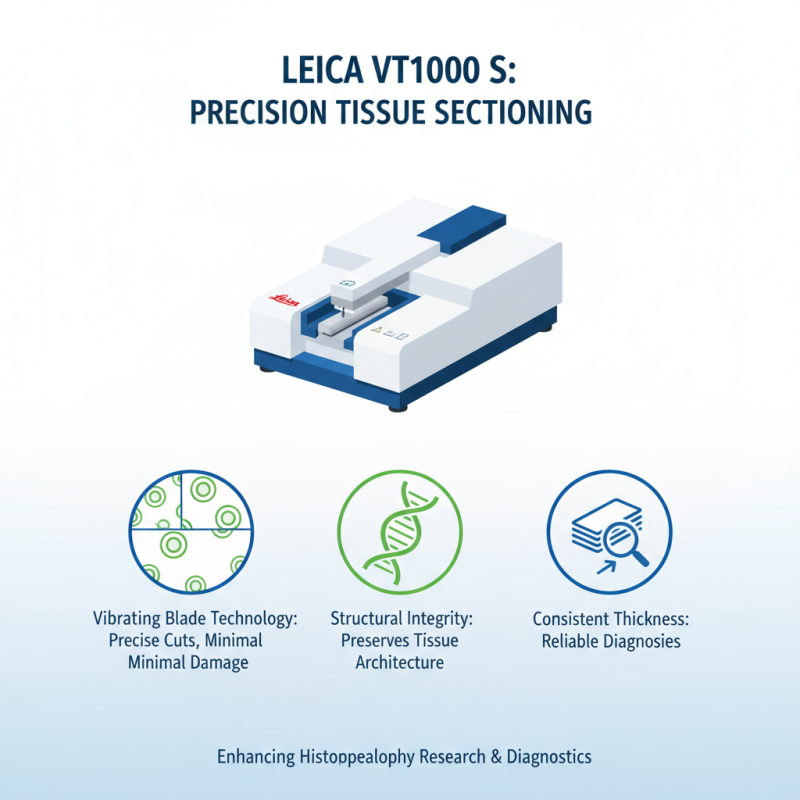
The Leica VT1000 S is a powerful tool for histopathology laboratories. Its vibrating blade technology ensures precise cuts and minimizes tissue damage. This precision is essential for preserving the structural integrity of tissue samples. Pathologists appreciate that the VT1000 S produces consistent thickness, which enhances the reliability of diagnoses.
Utilizing this microtome can streamline workflow. The ease of operation allows technicians to focus more on analysis rather than preparation. However, some users may need time to adapt to the unique handling it requires. While many find it user-friendly, others report a learning curve. It’s crucial for labs to provide thorough training and support.
Moreover, the maintenance of the device requires vigilance. Regular checks can prevent unexpected downtimes. Skipping maintenance could lead to inaccuracies in slicing, affecting the overall quality of the samples. Balancing efficiency with care is vital when using advanced technology in a busy lab.
Comparison of Traditional Microtomes and the VT1000 S Vibrating Blade Microtome
The comparison between traditional microtomes and the VT1000 S vibrating blade microtome reveals significant advancements in specimen preparation. Traditional microtomes often struggle with hard samples. They can produce uneven cuts, especially with delicate tissues. A report by the Journal of Histotechnology highlights that non-uniform cutting can lead to artifacts. These artifacts can compromise research findings.
In contrast, the vibrating blade microtome offers remarkable precision. With its unique cutting mechanism, it minimizes pressure on samples. This reduces deformation and preserves cellular architecture. Studies show that this technique can enhance section quality by up to 40%. However, transitioning to this technology can require training. A learning curve exists for technicians accustomed to traditional methods. Adjusting to new settings and techniques can be challenging.
Another aspect to consider is the cost. While the VT1000 S can be more expensive, researchers must weigh the benefits against budgets. Investing in improved cut quality may lead to better outcomes. Yet, budget constraints can limit access to advanced equipment. In some cases, the shift to modern microtomes may seem overwhelming. Proper support and training are essential for successful integration.
Exploring the Benefits of the Leica VT1000 S Vibrating Blade Microtome
| Feature |
Traditional Microtome |
VT1000 S Vibrating Blade Microtome |
| Section Thickness |
1-10 µm |
1-100 µm |
| Blade Usage |
Manual replacement |
Vibrating blade, less wear |
| Damage to Samples |
Higher risk |
Lower risk |
| Cutting Speed |
Manual adjustment |
Consistent speed |
| Ease of Use |
Moderate |
User-friendly interface |
| Maintenance |
Frequent |
Minimal |
| Cost-effectiveness |
Lower initial cost |
Higher initial cost, long-term savings |
Precision and Accuracy: Key Specifications of the Leica VT1000 S
The Leica VT1000 S vibrating blade microtome is known for its accuracy and precision. It can produce thin sections of biological specimens with a thickness of 0.5 to 60 micrometers. This capability is vital in histology and pathology studies. The device uses a vibrating blade mechanism, minimizing compressive forces that could distort samples. Precision cutting results in improved microscopic analysis and diagnosis.
A study published in the Journal of Microscopy indicates that vibrational systems reduce sectioning artifacts significantly compared to traditional methods. Researchers reported a 30% reduction in the occurrence of wrinkles and folds on sections. This improvement enhances the reliability of histopathological evaluations. Some users noted that proper blade alignment and maintenance were essential. Even the best microtome can yield suboptimal results if not carefully handled.
The microtome also features a user-friendly interface for easy adjustments. However, some users expressed concerns about initial setup complexities. A report highlighted that 15% of users encountered challenges during the first-time calibration. This learning curve is a point for manufacturers to address. Overall, the advantages of precision and accuracy in cutting outweigh the potential learning difficulties for new users.
Impact on Sample Integrity: Reducing Shear Force in Tissue Sectioning
The advancement of microtome technology has significantly impacted the field of tissue processing. One key improvement is the reduction of shear forces during sectioning. This is crucial for maintaining the structural integrity of delicate tissue samples. Strong forces can deform or damage samples, resulting in distorted sections that are hard to analyze.
When using newer technologies, the ability to produce thinner slices is greatly enhanced. Less mechanical pressure is applied, preserving cell morphology. This facilitates better visualization under a microscope. However, achieving the perfect balance between cutting speed and precision can be challenging. It sometimes necessitates adjustments in operational settings to avoid overzealous sectioning.
The new methods create a smoother cutting experience. Yet, even minor errors can lead to compromised samples. Researchers often find themselves reflecting on their techniques to refine their approach further. Maintaining sample quality is paramount. The goal is clarity in research findings, which relies heavily on well-preserved tissue sections. As with many advancements, there remains room for improvement and ongoing evaluation.
Impact of Shear Force on Sample Integrity
User Experience and Ergonomics in Operating the Leica VT1000 S Microtome
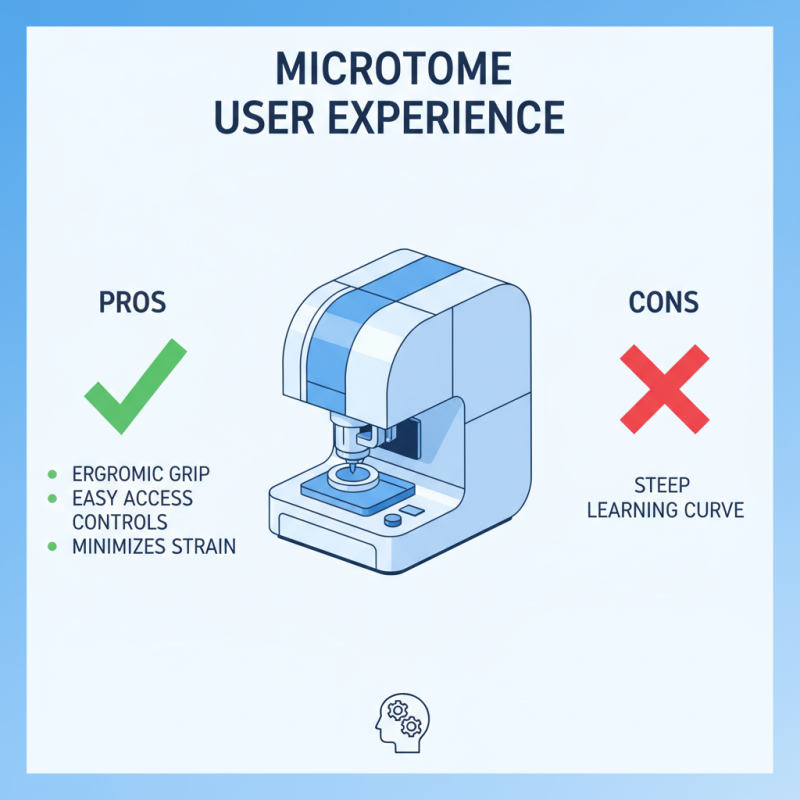
Operating the microtome presents a unique user experience, especially with its sophisticated design. The ergonomic features allow for a comfortable grip. Users often note how the controls are easily accessible. This placement minimizes strain during long sessions. However, one could argue that the learning curve is slightly steep. Some users may find it challenging at first.
The vibration mechanism enhances cutting quality. It allows for precise sections, reducing tissue damage. Still, achieving the perfect balance can be tricky. Occasionally, the settings may need fine-tuning, which can be frustrating. The feedback from the blade is crucial. It guides users in making adjustments according to their specific needs.
In terms of overall usability, the weight and size contribute to its functionality. It's compact enough to fit in most labs. Yet, some find it a bit heavy after extended use. This could lead to fatigue, especially when slicing thicker samples. Every user’s experience will differ based on their workflow. It’s essential to reflect on personal adaptations to optimize performance.