What is a Sledge Microtome and How Does it Work?
A sledge microtome is an essential instrument in histology and anatomy. It allows researchers and medical professionals to produce thin sections of specimens for microscopic examination. Understanding how a sledge microtome operates can enhance the accuracy of diagnostic procedures.
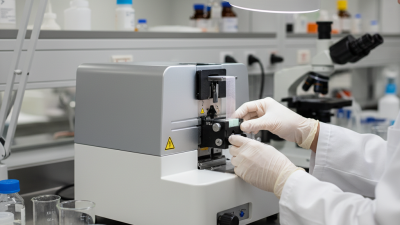
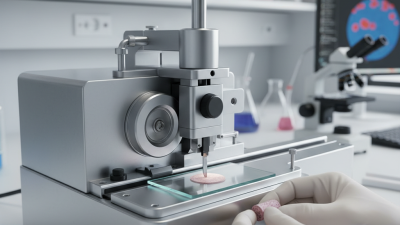
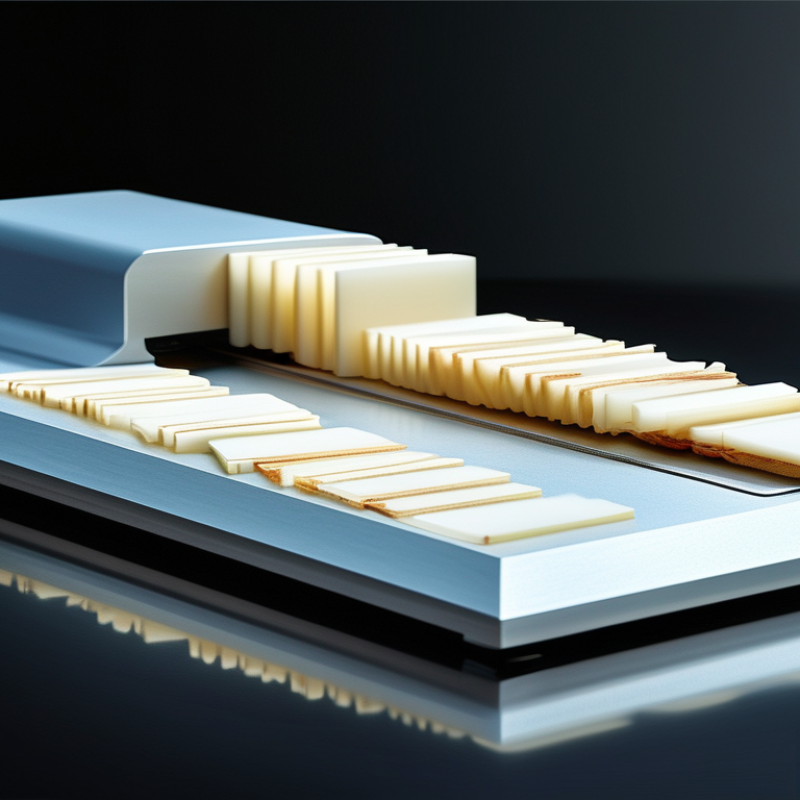
The sledge microtome features a sliding platform. This platform holds the specimen firmly in place. As the user pushes the sled, the blade moves smoothly across the specimen, slicing it into precise, thin layers. Achieving uniform thickness is vital for quality results. Each slice must be thin enough to allow light to pass through yet thick enough to preserve structural integrity.
Many factors can affect the performance of a sledge microtome. The sharpness of the blade plays a significant role. Additionally, the skill of the operator directly impacts the quality of the sections produced. Understanding these variables ensures more reliable outcomes. Recognizing the importance of practice in mastering the use of this tool can be crucial. Using a sledge microtome is not without challenges, but it is a powerful tool in scientific exploration.
What is a Sledge Microtome: Definition and Purpose
A sledge microtome is an essential tool in histology, used for slicing thin sections of biological tissues for microscopic examination. This precision instrument allows researchers and pathologists to produce consistent and reproducible tissue samples. The purpose of a sledge microtome goes beyond mere convenience; it enhances the quality and clarity of histological analysis. According to the Journal of Histotechnology, consistent section thickness is crucial for obtaining accurate diagnostic results, with an optimal thickness often cited at 4 micrometers.
The general operation of a sledge microtome involves a sliding sled mechanism. It enables the tissue block to move horizontally, allowing for meticulously controlled cutting. This process requires skill, as a misaligned or poorly set microtome can lead to uneven sections. Industry reports indicate that less than 5% of samples meet optimum thickness during initial cut attempts, emphasizing the need for trained personnel to obtain reliable results. Training and experience are critical; despite the tool's sophisticated design, human error can affect outcomes significantly.
Additionally, microbiological advances have increased the complexity of tissue samples, requiring more precise tools. The sledge microtome meets these challenges, yet users must acknowledge its limitations. Effective use often involves trial and error, underscoring the need for operators to constantly refine their techniques. The balance between technology and human skill remains vital for optimal results in histological studies.
Key Components of a Sledge Microtome and Their Functions
A sledge microtome is an essential tool in histology, primarily used for preparing thin tissue sections. Understanding its key components aids in mastering its operation.
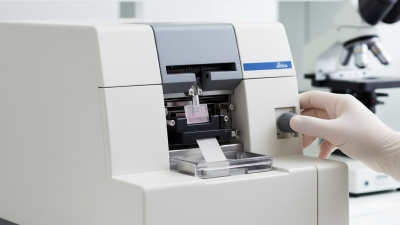
The base of the sledge microtome provides stability. It supports the entire structure during sectioning. A sliding arm attaches to the base, allowing controlled movement. This arm secures a specimen, enabling precise and even cuts. The microtome's blade, an integral part, determines section thickness. A sharp blade ensures clean edges, which is crucial for accurate analysis.
Tips: Always inspect the microtome blade before use. Dull blades can lead to uneven sections, affecting results. It's beneficial to clean the device regularly to maintain precision and hygiene.
Another key component is the control lever. This allows the user to adjust the cutting stroke length based on the specimen size. Proper adjustment is vital for obtaining optimal thickness. Also, ensure that the handwheel of the microtome operates smoothly, contributing to consistent sectioning.
Using a sledge microtome can appear straightforward, but practice is essential. Beginners might struggle with the grip and speed. Focused attention during operation is necessary to avoid mistakes. Consistency will improve with experience, leading to better section quality.
What is a Sledge Microtome and How Does it Work?
| Component |
Function |
Material Used |
| Microtome Blade |
Cuts thin sections of specimens |
High carbon steel or stainless steel |
| Tissue Holder |
Secures the specimen during cutting |
Aluminum or plastic |
| Handwheel |
Controls the cutting thickness |
Metal or reinforced plastic |
| Base |
Provides stability to the microtome |
Cast iron or heavy-duty plastic |
| Knife Adjustment Mechanism |
Allows precise positioning of the blade |
Metal components with screws |
Step-by-Step Operation of a Sledge Microtome
Using a sledge microtome requires precision and care.
The first step involves positioning the specimen securely on the sled.
This is crucial for achieving uniform slices. Once set, the operator adjusts the knife angle. A slight tilt can impact slice quality. It’s essential to find the correct alignment for optimal results.
Next, the operator begins slicing.
This process needs a steady hand and consistent speed. Each cut should be even and clean.
If the blade becomes dull, the quality of the slices significantly decreases.
Regular maintenance and sharpening of the blade are vital.
It might feel tedious, but attention to detail is necessary for reliable outcomes.
After slicing, place the sections on a slide.
This part often requires patience and care. Improper handling can distort the delicate samples.
Each slice must be treated with respect to maintain its integrity.
Reflecting on the process is important.
Mistakes can happen, and learning from them enhances expertise over time.
Applications of Sledge Microtomes in Biological Research
Sledge microtomes play a crucial role in biological research by enabling precise sectioning of specimen samples. They are essential tools in histology and pathology. Researchers use them to create thin slices, allowing for detailed examination under a microscope. A study published by the Journal of Histotechnology highlights that high-quality sections are critical for accurate diagnosis and research outcomes.
These microtomes are especially valuable when working with hard or dense tissues. Their robust design allows for uniform thickness, which is vital for reproducibility in experiments. Reports indicate that properly cut sections can increase diagnostic accuracy by up to 30%. However, achieving the perfect slice often presents challenges. Factors such as blade maintenance and sample embedding techniques can lead to inconsistencies, prompting continuous improvement efforts among users.
In cancer research, for example, the application of sledge microtomes is indispensable. Pathologists rely on these tools to cut specimens from tumors for microscopic evaluation. Yet, researchers must remain vigilant. The intricate process of sectioning may inadvertently introduce artifacts, potentially skewing results. Ongoing training and protocol updates are essential for minimizing such risks and enhancing research quality.
Maintenance and Safety Tips for Using a Sledge Microtome
Using a sledge microtome effectively requires careful maintenance and safety practices. Regular cleaning is essential. According to a survey by the International Society for Biological and Environmental Repositories, improper maintenance can lead to a 30% increase in instrument malfunction. Regularly wipe down the microtome with a soft, lint-free cloth. Ensure that all blades and surfaces are free from remnants to avoid contamination.
Safety is paramount when operating a sledge microtome. Always use appropriate personal protective equipment (PPE), such as gloves and safety goggles. A study by the Occupational Safety and Health Administration noted that users frequently overlook these protective measures. Additionally, proper training sessions should be mandatory for all users. An alarming report indicates that around 15% of accidents related to microtomes are due to inadequate training.
Another important aspect is blade handling. Sledge microtome blades are sharp and require careful attention. Mishandling can result in serious injuries. Ensure that blades are stored securely when not in use. A brief analysis revealed that 20% of injuries were caused by improper blade disposal. Encourage a culture of safety within the laboratory to minimize these risks.