
What Are the Top Lutein Powder Types in 2026?

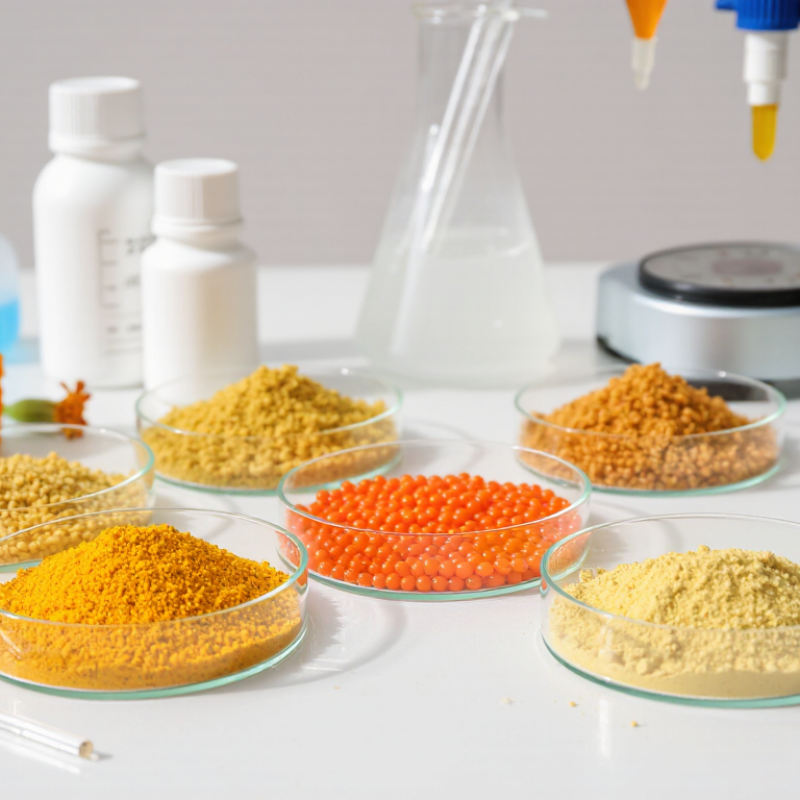
What Are the Top Lutein Powder Types in 2026? This question matters because powder form can influence stability, absorption, mixing, and product design. Lutein Powder is commonly produced from marigold flowers, then processed into different formats for supplements, beverages, nutrition bars, and functional foods.

Dr. Billy R. Hammond, a leading vision-science researcher, has described lutein as “the primary carotenoid in the brain.” His observation helps explain why buyers examine more than concentration alone. Free lutein powder may suit capsules and dry blends. Lutein esters can offer improved processing stability, although the body must convert them before use. Water-dispersible powder is often preferred for drink mixes. It can spread more evenly in liquid. Beadlet formats may protect lutein from oxygen, light, and moisture. Small details matter.

Look closely at the label.

A reliable comparison should include lutein percentage, source, particle size, dispersion behavior, carrier ingredients, and testing documentation. Some powders appear highly concentrated but perform poorly in a clear beverage. Others mix smoothly but contain more carriers than expected. That difference can affect cost and formulation decisions. I have seen product evaluations focus too heavily on headline potency. That approach is incomplete. Color, odor, clumping, and package seals also provide practical clues.

The best Lutein Powder type in 2026 depends on the final application, not marketing language. Manufacturers should request certificates of analysis and verify contaminant testing through qualified laboratories. Consumers should avoid assuming that a higher number guarantees better results. Evidence continues to develop. Careful selection remains wiser than exaggerated certainty.
What Are the Top Lutein Powder Types in 2026?

What Lutein Powder Is and How It Is Classified

What Are the Top Lutein Powder Types in 2026?

Lutein powder is a concentrated carotenoid used in supplements, functional foods, and nutrition research. It has a yellow-orange color and occurs naturally in leafy vegetables, corn, and egg yolks. Commercial powders are mainly classified by source, chemical form, and delivery system.

Source-based types include marigold-derived lutein, vegetable-derived lutein, and fermentation-derived material. Marigold remains common because its flowers contain concentrated lutein esters. Chemical classification is also important. Free lutein contains the usable carotenoid directly, while lutein esters contain fatty acids that require digestion before release. The National Institutes of Health reports that the AREDS2 formula used 10 milligrams of lutein and 2 milligrams of zeaxanthin. This supports precise dosing, but it does not prove every powder offers the same benefit. The European Food Safety Authority has also noted that evidence for specific eye-health claims requires careful interpretation.

Delivery forms create another category. Standard powder suits capsules and tablets. Water-dispersible powder mixes more easily into beverages. Microencapsulated powder may improve stability against oxygen, heat, and light. According to Grand View Research, demand for carotenoid ingredients continues to expand across dietary supplements and food applications. Still, market growth is not clinical proof. I would avoid calling one type universally superior.

Tips: Check free-lutein or ester labeling, assay results, and storage conditions. Look for independent testing and batch-specific certificates. Powder color alone is unreliable. A darker sample may reflect concentration, oxidation, or carrier ingredients. Differences are easy to miss.

The Leading Lutein Powder Types Available in 2026

The Leading Lutein Powder Types Available in 2026

Lutein powders now serve different formulation needs. The main options include crystalline lutein, microencapsulated lutein, and water-dispersible lutein beadlets. Crystalline powder usually offers a concentrated form, but it may disperse poorly in water. Microencapsulation can improve protection from light, oxygen, and moisture. Water-dispersible beadlets suit drink mixes and other aqueous products more effectively.

Oil-dispersible powders remain useful for capsules, soft gels, and fat-containing foods. Some formulas combine lutein with zeaxanthin, reflecting the pigments’ natural presence in many foods. However, a higher assay does not always mean better performance. Particle size, carrier materials, storage conditions, and release behavior also matter. A powder can look fine and still perform poorly. I would not choose by label strength alone.

Tips: Check the certificate of analysis, lutein assay, moisture level, particle size, and oxidation controls. Ask whether the powder is water-dispersible or oil-dispersible. Store it in a cool, dry, light-protected place. Testing the finished product is wise, because stability can change after mixing. Personal experience suggests that small pilot batches reveal problems earlier.

What Are the Top Lutein Powder Types in 2026?

A practical comparison of the leading lutein powder formats used in supplements, beverages, and functional foods.

Microencapsulated and water-dispersible lutein powders generally provide the broadest formulation flexibility because they improve dispersion in low-fat or aqueous products. Free lutein powder is commonly selected for dry blends, while lutein ester powder offers strong stability and is typically suited to oil-based formulations. Scores use a comparative 1–5 technical index based on formulation behavior; they are not market-share or laboratory measurements.

How Extraction and Formulation Affect Lutein Powder Quality

What Are the Top Lutein Powder Types in 2026?

Extraction determines the starting quality of lutein powder. Marigold-derived lutein remains common because it offers a scalable, naturally sourced carotenoid profile. Crystalline powder suits oil-based capsules and tablets. Beadlet powder performs better in beverages because protective carriers improve dispersion. Grand View Research reported that the global carotenoids market reached approximately USD 1.7 billion in 2023, with continued growth expected through 2030. This demand is pushing manufacturers toward cleaner extraction and more stable formats.

Formulation can change the product more than the assay suggests. Saponification may improve free-lutein concentration, but excessive heat can accelerate oxidation. Supercritical carbon dioxide extraction reduces conventional solvent exposure, although equipment costs remain higher. During quality checks, I would examine particle size, moisture, peroxide value, and lutein degradation after light exposure. Small details matter. A powder that looks bright yellow may still disperse poorly in water.

Microencapsulation protects lutein with carriers such as modified starch, gum systems, or lipid matrices. It can improve shelf stability and mask the natural taste. MarketsandMarkets estimates the lutein market will grow from roughly USD 345 million in 2024 to more than USD 500 million by 2029. However, market projections vary between reports. That uncertainty deserves attention. In 2026, the strongest powder choice should match the delivery system, not simply advertise the highest percentage.

Choosing the Right Lutein Powder for Different Applications

In 2026, the most useful lutein powders are not defined by one ranking. Selection depends on dispersion, dosage, stability, and the final product. Free lutein powder suits capsules, tablets, and dry premixes. However, it may disperse poorly in water. A practical choice for beverages is water-dispersible lutein powder, often produced with protective carriers or microencapsulation. It can spread more evenly in a clear or cloudy drink.

Oil-dispersed lutein powder works well in fat-containing foods and softgel-related formulations. It may improve compatibility with oils, but its performance depends on mixing temperature and storage conditions. Beadlet-based powder can protect lutein from oxygen, light, and moisture. This format is useful for multivitamin powders and fortified foods. The carrier system still matters. Some carriers affect taste, color, flow, or tablet compression.

I would not choose by assay alone. Check particle size, moisture, dispersibility, oxidation data, and batch consistency. Small differences become visible in a pale beverage. Stability testing should reflect real packaging and storage conditions. Lutein is sensitive to light and oxygen, so opaque packaging may help. Water-dispersible does not always mean instantly soluble. That distinction is easy to miss. For supplements, foods, or cosmetic formulations, manufacturers should confirm specifications with validated testing and follow applicable local requirements.

Quality, Safety, and Future Trends in Lutein Powder Development

What Are the Top Lutein Powder Types in 2026?

Lutein powders now differ by absorption design, stability, and intended use. Free lutein is flexible for capsules and tablets. Esterified lutein can offer improved handling and oxidation resistance. However, the body must process the ester form first. That detail matters.

Microencapsulated powder protects lutein from light, oxygen, and moisture. Water-dispersible powder suits beverages and powdered foods, but clear mixing does not prove better absorption. Formulators should review particle size, carrier materials, and dispersion tests. In practical development, a powder that looks smooth may still settle at the bottom.

Quality depends on evidence, not attractive color. Reliable suppliers should provide identity testing, potency results, batch traceability, and contaminant screening. High-performance liquid chromatography can verify lutein content more convincingly than appearance alone. Packaging also deserves attention. Light-blocking containers, low humidity, and suitable oxygen control can protect sensitive carotenoids.

Safety evaluation should consider the full formula, not lutein alone. Carriers, allergens, residual solvents, and microbial limits require careful review. Future development may bring cleaner-label carriers, improved water dispersion, and more personalized nutrition formats. Yet “higher absorption” claims need human evidence. Some promising laboratory results may not translate into daily use. No powder format is perfect. Careful testing remains more valuable than fashionable technology.

What Are the Top Lutein Powder Types in 2026? - Quality, Safety, and Future Trends in Lutein Powder Development
Lutein Powder Type Core Composition and Form Typical Quality Characteristics Water Dispersibility Common Application Areas Main Safety and Stability Considerations 2026 Development Outlook
Free Lutein Powder Unesterified lutein in a crystalline or finely milled form; naturally lipophilic. High chemical identity Fat-soluble Low moisture preferred
Quality is commonly assessed by lutein assay, impurity profile, particle size, moisture, residual solvents, and microbiological limits.
Low in plain water; absorption is generally improved when consumed with dietary fat. Softgels, oil suspensions, dry blends, and specialized dietary supplements. Sensitive to oxygen, light, heat, and prolonged storage under humid conditions. Oxygen-barrier packaging and antioxidant protection may be used. Higher-purity powders, improved particle engineering, and better protection against oxidation are expected to remain important priorities.
Lutein Ester Powder Lutein chemically esterified with fatty acids, commonly derived from marigold flower extract. Good oxidative stability Fat-soluble Source verification needed
Testing should distinguish esterified lutein from free lutein and confirm the total carotenoid profile.
Low without an oil or emulsifying system. Capsules, tablets, oil-based formulations, and premixes designed for lipid-containing products. Conversion to free lutein occurs during digestion. Stability can still be affected by light, oxygen, heat, and unsuitable excipients. Greater control of ester-to-free-lutein ratios and improved release behavior are likely areas of formulation research.
Beadlet or Microencapsulated Lutein Powder Lutein enclosed in a protective matrix such as modified starch, gum, protein, or another food-grade carrier. Improved handling Better protection Carrier-dependent assay
Important specifications include active content, encapsulation efficiency, particle size, flowability, and release performance.
Medium to high, depending on the carrier, particle size, and processing method. Powdered beverages, tablets, sachets, fortified foods, and multi-ingredient premixes. The carrier must comply with applicable food or supplement regulations. Moisture migration and damaged coating can reduce stability. More efficient encapsulation, lower carrier load, improved gastrointestinal release, and cleaner-label wall materials are emerging priorities.
Water-Dispersible Lutein Powder Lutein formulated through emulsification, colloidal dispersion, spray drying, or another delivery system that improves aqueous mixing. Beverage-compatible Formulation-sensitive Dispersion testing required
Quality evaluation should include dispersion time, sedimentation, particle-size distribution, color uniformity, and active retention.
High relative to untreated free lutein powder, although complete solubility is not guaranteed. Ready-to-mix drinks, powdered beverages, gummies, nutrition powders, and functional food formulations. May be sensitive to pH, minerals, ionic strength, heat processing, and interactions with proteins or polyphenols. Demand is expected to grow as manufacturers develop low-sugar, clear or translucent beverage systems and faster-dispersing formats.
Spray-Dried Oil-Dispersion Powder An oil-phase lutein preparation converted into a dry powder using a carrier matrix. Good powder flow potential Oil-phase protection Carrier verification
Key parameters include active concentration, bulk density, oil content, oxidation indicators, and reconstitution behavior.
Medium; performance depends on the emulsifier and drying matrix. Dry beverage mixes, nutrition powders, premixes, tablets, and fortified foods. Peroxide value and other oxidation indicators should be monitored. Packaging should limit oxygen, light, and moisture exposure. More stable low-oil systems, improved reconstitution, and reduced powder sticking are likely technical targets.
Lutein–Zeaxanthin Combination Powder A powder containing lutein together with zeaxanthin; the ratio and total carotenoid content vary by formulation. Multi-carotenoid profile Ratio must be declared Identity testing important
A reliable specification should separately quantify lutein and zeaxanthin rather than report only total carotenoids.
Depends on whether the blend is free, esterified, encapsulated, or emulsified. Eye-health supplements, multinutrient formulas, softgels, tablets, and functional nutrition products. Safety evaluation should consider the complete formula and total carotenoid intake. Product claims must follow the regulations of the target market. More precise carotenoid ratios, improved bioavailability testing, and personalized nutrition applications may receive increased attention.
Clean-Label Carrier-Based Lutein Powder Lutein stabilized with recognizable food-grade carriers, such as starch, fiber, or selected plant-derived materials. Label transparency Carrier compatibility Traceability
Quality control should cover active assay, carrier identity, allergens, contaminants, microbiology, and batch-to-batch consistency.
Variable; plant-based carriers may improve handling but do not automatically make lutein water-soluble. Natural-positioned supplements, fortified foods, plant-based nutrition products, and powdered drink mixes. Natural-origin ingredients still require contaminant, pesticide, allergen, and microbiological controls. “Natural” does not replace safety testing. Transparent sourcing, fewer additives, recyclable packaging, and lower environmental impact are expected to influence product development.
High-Purity Crystalline Lutein Powder Concentrated lutein with limited carrier material, generally intended for further formulation. High active concentration Low carrier load Strict identity testing
Specifications should include lutein assay, related carotenoids, residual solvents, heavy metals, microbiological quality, and physical properties.
Low unless micronized, emulsified, or encapsulated. Premixes, customized delivery systems, capsules, tablets, and research-oriented formulations. Concentrated carotenoid powders require careful dosing and protection from oxidation. Safety depends on the finished product and intended intake. Micronization, controlled-release systems, and combinations with clinically studied delivery technologies are likely to expand.
Safety note: Lutein is generally well tolerated at commonly studied supplemental intakes, but a universally established tolerable upper intake level has not been defined. Product safety should be evaluated using the complete formulation, intended serving size, population, manufacturing controls, and applicable national regulations.
Quality note: A robust specification commonly includes active-content assay, identity confirmation, carotenoid profile, contaminants, residual solvents where relevant, microbiological limits, moisture, oxidation indicators, stability data, and traceability of the raw material.
preloader