
Refurbished Pathology Equipment
What Are the Top Accu Edge Microtome Blades?
Choosing the right accu edge microtome blades can shape the quality of every tissue section. A clean cut helps pathologists examine cellular detail, while compression, chatter, or tearing can obscure it. The stakes are substantial: the World Health Organization’s Global Cancer Observatory recorded about 20 million new cancer cases worldwide in 2022. Many diagnostic pathways rely on tissue examination, though a blade alone cannot guarantee an accurate diagnosis.
This guide compares blade options through practical criteria: cutting consistency, edge durability, compatibility with the microtome holder, and performance across tissue types. ISO 15189:2022 sets requirements for quality and competence in medical laboratories, but it does not rank blade brands. That distinction matters. Marketing claims about sharpness or longevity should be checked against documented specifications and the laboratory’s own sectioning results. A blade that works smoothly on routine paraffin blocks may behave differently with dense or fibrous specimens.
Small details count. Look for even ribbons, reduced vibration, and fewer changes during a busy cutting session. Still, no single blade is best for every lab. That is easy to overlook. We will assess leading choices with attention to evidence, intended use, and the limitations behind each claim, helping readers make a more informed selection.
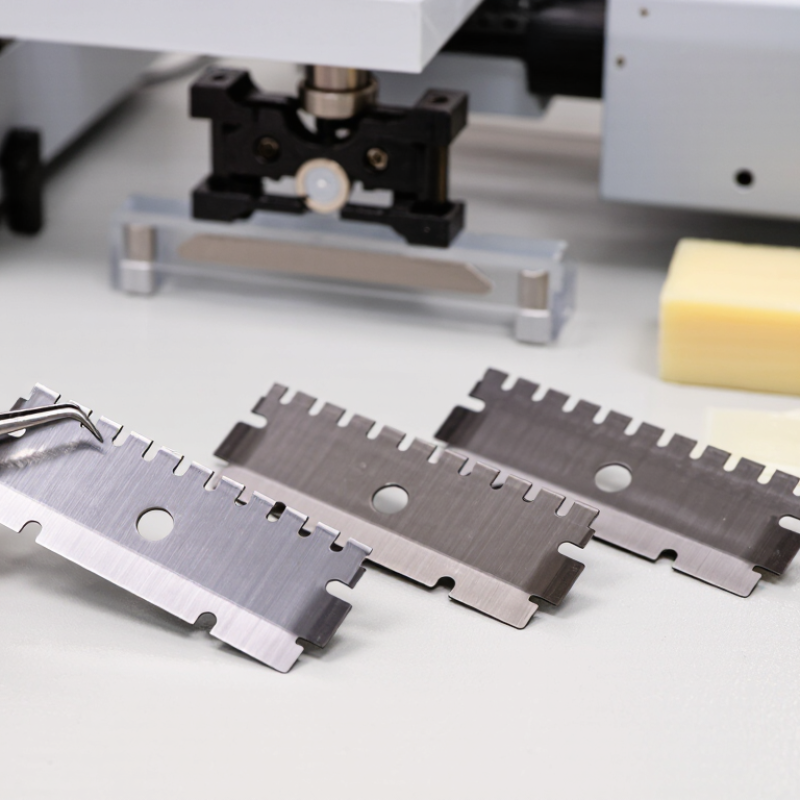
What Accu Edge Microtome Blades Are and How They Work
Microtome blades are thin, precision-ground steel edges used to slice tissue blocks into sections for microscope slides. In routine paraffin histology, sections are commonly cut at about 3–5 μm, a range described in Bancroft’s Theory and Practice of Histological Techniques, 8th edition (2019). At this scale, a small nick or a poorly seated blade can leave visible lines, compression, or gaps in the tissue. The blade meets the block at a controlled angle while the instrument advances the specimen by a tiny, consistent amount. The cut sections may form a ribbon, which the technician transfers to a warm water bath before mounting.
Small differences matter. Blade design and edge geometry affect how smoothly the tissue cuts, but setup matters too. A firm blade clamp, a clean block face, and steady trimming help reduce chatter and uneven ribbons. When sections wrinkle, it is tempting to blame the blade immediately. That is not always fair; block temperature, tissue hardness, and clearance angle can also change the result. A fresh edge is useful, not magical. Technicians should follow the microtome and blade instructions, handle edges with appropriate tools, and replace blades when cutting quality declines. The practical test is the section itself: an even ribbon, intact tissue, and detail that remains clear under the microscope.
What Are the Top Accu Edge Microtome Blades? - What Accu Edge Microtome Blades Are and How They Work
Microtome blades are precision cutting edges used to produce thin tissue sections for microscopy. The options below describe common blade configurations and applications; suitability depends on the microtome holder, specimen, and sectioning method.
| Blade configuration | Typical application | How it works | Advantages | Points to consider |
|---|---|---|---|---|
| High-profile disposable blade | Routine paraffin-embedded tissue sectioning | A thin, fixed blade edge moves across the wax block as the microtome advances the specimen by a set distance. | Commonly used for routine histology; the taller profile can provide a firm blade section in compatible holders. | Requires a holder designed for the blade profile. Cutting performance depends on block hardness, clearance angle, and edge condition. |
| Low-profile disposable blade | Routine paraffin sections and laboratories using low-profile holders | The microtome feeds the specimen past the blade edge in controlled increments, producing serial sections. | Widely used for routine sectioning and compatible with microtomes fitted with the corresponding holder. | Not interchangeable with every high-profile holder. Confirm holder compatibility before loading. |
| Coated disposable blade | Applications where reduced friction or improved section handling is desired | A surface treatment on the blade may alter friction at the cutting interface; the microtome still controls section thickness through specimen advancement. | May help with ribbon formation or section handling for some specimens and workflows. | Results vary with tissue, wax, temperature, and coating type. Follow the blade maker’s handling and disposal instructions. |
| Reusable steel knife | Specialized sectioning workflows where a reusable knife is appropriate | A sharpened steel edge cuts the specimen as the instrument advances it; the knife must be maintained and aligned. | Can be resharpened and reused when the equipment and workflow support it. | Requires appropriate sharpening, cleaning, storage, and handling procedures; a damaged or dull edge can impair section quality. |
| Special-purpose blade for frozen sections | Cryostat sectioning of frozen tissue | The blade cuts tissue maintained at a low temperature inside a cryostat; sectioning settings are adjusted for the specimen and temperature. | Designed for workflows in which tissue is sectioned while frozen rather than embedded in paraffin. | Use a blade and holder suitable for the cryostat. Temperature, tissue freezing, and blade condition strongly affect section quality. |
Selection note: Match the blade profile to the holder, then consider the specimen type, embedding medium, and intended sectioning method. Handle blades with suitable tools and dispose of used blades in an approved sharps container.
Related Posts
-
2026 Best High Profile Microtome Blades for Global Buyers
-
What Are the 10 Best Disposable Microtome Blades?
-
Best Low Profile Microtome Blades for Precision Cutting Techniques?
-
How to Choose the Best Microtome Blade for Your Needs?
-
China Best Low Profile Microtome Blades for Global Buyers
-

Best High Profile Microtome Blades Supplier in China?
