China Best Low Profile Microtome Blades for Global Buyers
China has become a major sourcing base for low profile microtome blades, serving pathology laboratories, research centers, and teaching hospitals worldwide. Yet price alone should never guide a purchasing decision. Blade geometry, steel quality, coating consistency, edge stability, and holder compatibility directly affect section quality. A small defect can create chatter, compression, or uneven ribbons across an entire specimen.
Dr. John A. Kiernan, a respected histology author and microtomy expert, once offered a practical reminder: “A sharp knife is essential for good sections.” That principle still matters when evaluating low profile microtome blades for global use. Experienced buyers examine cutting performance on paraffin blocks, resin materials, and harder tissue samples. They also review batch traceability, protective packaging, and supplier response times. A reliable Chinese manufacturer should provide clear dimensions, production records, inspection standards, and realistic performance guidance.
The details are tangible. A clean edge should move smoothly through the block, without tearing delicate tissue. The blade box should protect every edge during long-distance transport. The holder should lock firmly, with no unexpected movement.
Small details matter.
However, no supplier fits every laboratory perfectly. Some buyers may choose economical blades and later discover higher replacement rates. Others may select premium coatings without testing actual workloads. That is where judgment becomes imperfect. Trial samples, documented evaluations, and direct technical communication remain necessary. This guide examines how global buyers can compare Chinese low profile microtome blades with greater confidence, while recognizing that dependable results come from both blade quality and disciplined laboratory practice.
What Low-Profile Microtome Blades Are and Why They Matter
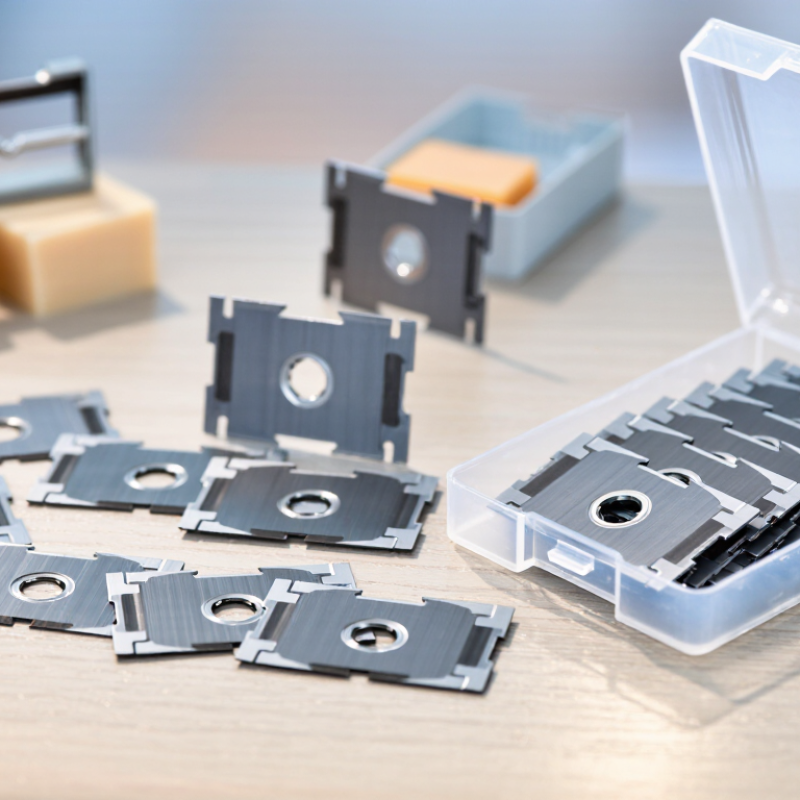
Low-profile microtome blades are designed with a reduced blade height and a carefully controlled cutting edge. They fit compatible holders while creating less obstruction near the specimen. This geometry can improve visibility during trimming and sectioning. It may also support smoother paraffin ribbons at common laboratory settings.
In daily histology work, small details matter. A clean block face, stable clearance angle, and firm blade clamping can reduce chatter, compression, and uneven sections. Low-profile blades are often useful for routine paraffin blocks, especially when the operator needs precise control around narrow or irregular specimens. However, low profile does not mean universally better. Hard tissue, decalcified samples, and resin materials may require different blade designs. The wrong choice can produce scratches, folds, or frequent edge damage.
Global buyers should examine blade length, steel quality, edge consistency, coating, and holder compatibility. Packaging should protect the edge from vibration and moisture during transport. Batch records and inspection data also deserve attention. A reliable supplier should provide practical specifications, not only attractive cutting claims. Trial testing remains necessary. One blade may perform well on soft paraffin but disappoint on dense tissue. That limitation is easy to overlook. Experienced laboratories can compare section thickness, ribbon formation, and blade life under identical conditions before placing larger orders.
Key Features of China-Made Low-Profile Microtome Blades
China Best Low Profile Microtome Blades for Global Buyers
Key Features of China-Made Low-Profile Microtome Blades
China-made low-profile microtome blades are designed for controlled sectioning with reduced blade height. This geometry can improve visibility near the specimen block. It also helps limit contact resistance during routine cutting. In practical laboratory use, edge stability matters more than sharpness alone. A blade that stays steady may produce cleaner ribbons across paraffin blocks.
A 2024 market analysis by Grand View Research estimated the global microtome market at approximately USD 160 million in 2023. The report also projected continued growth through 2030, supported by expanding histopathology services. This demand increases attention on repeatable blade quality. Key features include uniform edge grinding, corrosion-resistant steel, protective coatings, and secure packaging. Lot identification is equally important. It supports traceability during laboratory quality checks.
Small details matter.
Low-profile designs can reduce trimming waste and improve operator control. However, performance still depends on clearance angle, specimen hardness, and instrument alignment. No blade is perfect. Occasional edge variation can occur, even after strict inspection. Buyers should request batch-level test data, dimensional tolerances, and compatibility guidance. A 2023 WHO laboratory quality management reference emphasizes documented procedures and equipment control. That principle applies here. Reliable suppliers should provide inspection records, storage instructions, and responsive technical support.
Blade Materials, Coatings, and Cutting Performance Compared
Low-profile microtome blades depend on a careful balance between material hardness, edge stability, and specimen response. Stainless steel offers reliable corrosion resistance and economical routine sectioning. Tungsten carbide provides greater hardness, helping maintain a sharp edge through dense tissue or embedded material. However, excessive hardness can increase chipping risk when the block contains mineral particles. Glass and diamond edges can deliver exceptional sharpness, but they require stricter handling and application control.
Coatings change friction more than they change basic blade geometry. Chromium-based coatings may improve wear resistance and reduce edge oxidation. Low-friction coatings can help paraffin pass smoothly, especially when the cutting temperature is stable. ASTM E384 hardness testing and ISO 6507 Vickers testing provide useful comparison methods, but laboratory hardness does not fully predict section quality. Cutting angle, clearance angle, block temperature, and feed speed still matter.
The 2024 market analysis from Grand View Research projects continued growth in precision laboratory cutting equipment, driven partly by higher-throughput pathology workflows. That trend favors blades with consistent edges and fewer replacements. Yet, the report does not prove that one coating fits every laboratory. My practical view is less tidy: a coated blade may perform beautifully on paraffin, then struggle with resin. Operators should record chatter, compression, ribbon continuity, and edge damage during trials. Small differences matter. A 2023 laboratory quality report from the World Health Organization also emphasizes validated procedures and documented performance, not specifications alone.
How Global Buyers Can Evaluate Suppliers and Product Quality
Buying low profile microtome blades requires more than comparing prices. Global buyers should examine the supplier’s production experience, quality controls, and technical communication. Ask how blade thickness, bevel angle, and edge sharpness are measured. Reliable suppliers can provide inspection records, material specifications, and lot traceability. They should also explain storage conditions and protective packaging. A blade may look polished, yet produce uneven sections or chatter during cutting.
Request samples from different production lots, not only one shipment. Test them on your usual tissue types and paraffin hardness. Check section smoothness under magnification, cutting resistance, edge damage, and usable blade life. Packaging matters too. Each blade should remain secure, dry, and clearly identified during international transport. Suppliers with responsive engineers usually answer specific questions. Vague replies deserve caution. Quality claims alone are not enough.
Tips: Create a simple scorecard for consistency, documentation, sample performance, lead time, and after-sales response. Keep test conditions unchanged. Record failures, even small ones. A supplier may pass one trial and fail the next; this is easy to overlook. Also review whether certificates match the actual factory and product. The cheapest offer can become expensive when damaged sections delay laboratory work. Perfect evaluation is difficult, and buyers should revise their criteria after every shipment.
Ordering, Compatibility, Packaging, and International Shipping Factors
Choosing a low-profile microtome blade is not only a price exercise. The holder geometry, clamp depth, blade length, and clearance must match. A blade may look identical yet sit too high, causing uneven sections or chatter. Confirm the instrument model, holder type, cutting angle, tissue range, and disposable or reusable design before ordering. Ask for a dimensional drawing and a sample lot. Fit matters.
Packaging deserves the same technical attention. Each edge should have rigid protection, separation, and a visible lot code. Moisture barriers help during long storage, but excessive sealing can trap condensation after temperature changes. Request carton dimensions, pieces per box, gross weight, and photographs of inner packing. ISTA testing procedures can guide parcel and vibration checks, although a laboratory test is not a guarantee for every route. I would add a small receiving inspection: count units, check corrosion, and test one blade on a known block.
International shipping changes the purchasing calculation. UNCTAD’s Review of Maritime Transport 2023 states that maritime transport carries over 80% of global merchandise trade by volume. Sea freight may reduce cost, but port transfers increase waiting and handling exposure. Air freight is faster, not automatically safer. Confirm commercial invoices, country-of-origin details, tariff classification, Incoterms, insurance, and temperature or humidity limits with the customs broker. Packaging should survive the final-mile carrier, not only the factory truck. One weakness remains: buyers often compare unit prices before calculating rejected sections, delays, and replacement stock. That comparison needs revision.
Low-profile disposable microtome blades are commonly specified at approximately 80 mm in length and 8 mm in profile width, while high-profile alternatives are commonly around 14 mm wide. Buyers should confirm the holder system, blade geometry, pack quantity, protective packaging, and destination-country shipping requirements against the supplier’s technical datasheet before ordering.