
Refurbished Pathology Equipment
Where to Buy the Best HM 325 Microtome in China?
Choosing where to buy the best HM 325 microtome in China takes more than comparing prices. Buyers should check the instrument’s condition, service history, included accessories, and availability of replacement parts. Ask for clear photographs of the handwheel, specimen clamp, knife holder, and feed mechanism. A short demonstration can reveal uneven movement or excessive play. Small details matter.
Histotechnology author John D. Bancroft’s published work emphasizes careful technique and reliable preparation. A practical paraphrase for buyers is this: a dependable section starts with equipment that is properly maintained and suited to the work. This is a paraphrase, not a verified direct quotation about the HM 325. That distinction matters. A seller’s confident claim cannot replace inspection, documentation, or a written warranty.
When comparing Chinese suppliers, ask whether the HM 325 is new, refurbished, or previously used. Request its serial number, maintenance records, delivery terms, and post-sale support details. Confirm which accessories are included; a missing clamp or knife holder can delay routine work. If possible, ask the supplier to demonstrate consistent feed and smooth handwheel movement using a sample block. Check the answers, not just the brochure. Some listings may be incomplete, and that deserves a second look. A low price can be tempting. It is not proof of value. The best choice is the supplier who explains the instrument’s condition clearly, provides verifiable records, and answers technical questions without pressure.
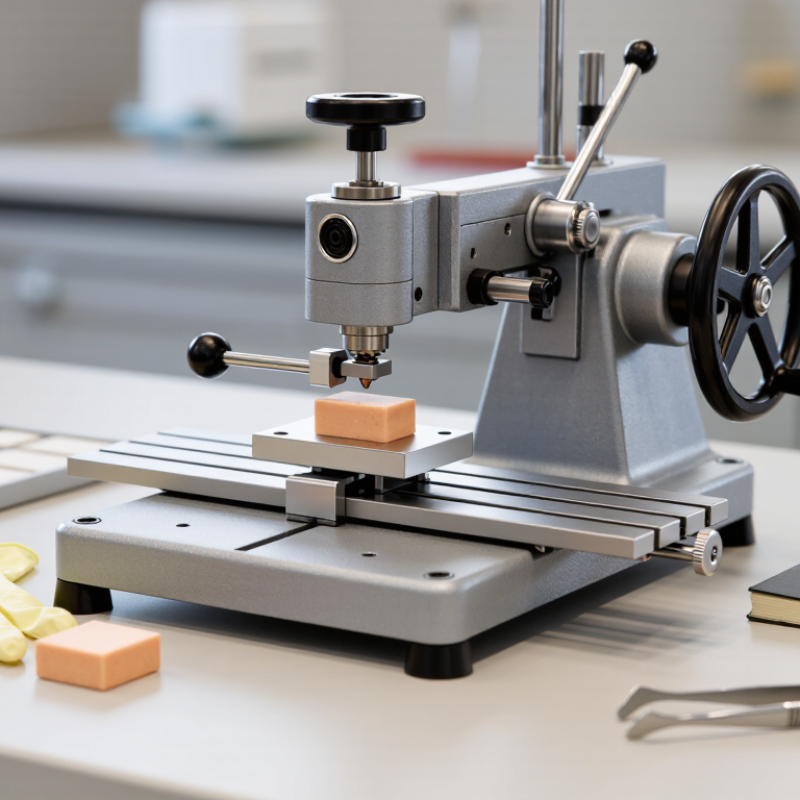
Understanding the HM 325 Microtome and Its Applications
The HM 325 is a rotary microtome used to cut thin sections from prepared tissue blocks. A handwheel moves the specimen toward a blade in controlled increments. Operators commonly use it with paraffin-embedded samples in teaching and histology laboratories. The goal is a section thin enough for light to pass through after staining. Small adjustments matter. A steady cutting rhythm can help produce smooth ribbons, while a dull blade or poorly prepared block may cause folds and chatter.
These sections support examination of tissue structure under a microscope. A pathologist may assess features such as cell arrangement, tissue boundaries, or changes in a stained sample. Researchers also use microtomy to prepare specimens for comparative studies and laboratory teaching. The instrument does not interpret results; careful preparation and qualified review remain essential. A clean work surface, secure specimen clamp, and suitable blade are practical basics. So is patience.
When evaluating an HM 325, consider its condition, service history, available accessories, and compatibility with the samples you handle. Ask how the thickness controls are checked and whether local technical support is available. A demonstration using a representative block can reveal vibration, uneven advancement, or handling issues. Specifications alone may not tell the whole story. Even a capable microtome can produce poor sections if the block, blade, or operator technique is unsuitable, so training and routine maintenance deserve attention.
Where to Buy the Best HM 325 Microtome in China? - Understanding the HM 325 Microtome and Its Applications
| Dimension | Details | Practical Relevance for Buyers and Users |
|---|---|---|
| Instrument type | Manual rotary microtome for preparing thin sections from paraffin-embedded specimens. | Suitable for routine histology laboratories that need controlled, repeatable sectioning and do not require motorized cutting. |
| Section thickness setting | Commonly published nominal range: 0.5–60 µm. | Thin settings are used for routine microscopy sections; the appropriate setting depends on the specimen, embedding medium, and laboratory protocol. |
| Trimming thickness setting | Commonly published nominal range: 10–60 µm. | Thicker cuts can help expose the tissue surface before producing the final sections. |
| Horizontal specimen feed | Commonly published nominal travel: approximately 28 mm. | Provides the specimen advance needed for successive cuts. Confirm the value against the documentation for the specific instrument revision. |
| Vertical specimen stroke | Commonly published nominal stroke: approximately 60 mm. | Determines the available specimen movement during a cutting cycle and helps establish compatibility with the intended specimen blocks. |
| Typical applications | Routine paraffin histology, tissue section preparation, and teaching or research laboratory work. | Sections are commonly transferred to slides for staining and examination by light microscopy. |
| Important accessories | Blade or knife holder, specimen clamp, waste tray, and any required specimen-orientation components. | Check which accessories are included in the quotation. Holder compatibility and availability of suitable blades affect day-to-day use. |
| Condition checks for a used unit | Inspect the handwheel, locking mechanism, feed movement, specimen clamp, blade holder, and visible mechanical surfaces. | Request a function test and service history. A smooth feed and secure clamping are important for consistent sectioning. |
| Buying in China | Compare authorized or qualified laboratory-equipment suppliers, local service availability, documentation, and delivery terms. | Ask for the instrument’s serial-number record, operating manual, included-accessory list, warranty terms, and written confirmation of its condition. |
| Before placing an order | Verify the exact model designation, manufacturing revision, specifications, included components, and after-sales support in writing. | Published specifications can vary by revision and configuration; confirm them against the unit’s manual or formal technical documentation. |
Nominal specifications are provided as a purchasing reference. Confirm all technical details and configuration-specific features with the documentation supplied for the exact unit.
Related Posts
-
Top Leica Rotary Microtome for Sale Worldwide?
-

Best Microm Microtome Techniques for Precision Cutting?
-
Microm Microtome Tips for Efficient Tissue Sectioning?
-
What is a Microm Microtome and How to Choose the Best One?
-

How to Use an RM2235 Microtome Safely and Effectively
-

What Is the Best Thermo Fisher Microtome?
