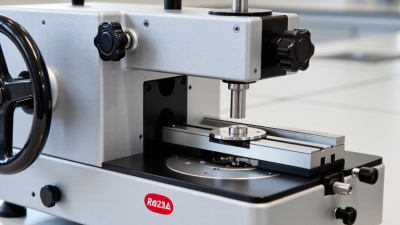
Choosing where to buy the best rotary microtome in China takes more than comparing prices. A suitable instrument should match your laboratory’s sample volume, section thickness requirements, and daily workflow. For routine paraffin work, examine how smoothly the handwheel moves and whether the specimen holder stays secure during repeated cuts. Small details matter.
This guide explains how to assess Chinese manufacturers and suppliers without relying on broad claims or polished product photos alone. Ask for a live demonstration, clear technical specifications, and documentation covering quality control. Check whether the supplier can provide installation guidance, operator training, spare parts, and responsive after-sales support. A low quotation may look attractive, but shipping, setup, and maintenance can change the real cost. Details matter.
There is no single best rotary microtome for every lab. A teaching facility may value simple controls and durable construction, while a pathology laboratory may prioritize consistent sectioning and dependable service. If possible, compare actual cut sections and ask for references from customers with similar applications. Confirm delivery timelines and warranty terms in writing. Even careful buyers can overlook practical issues, such as local access to blades or help after installation. That takes time. The right choice is usually the supplier that answers technical questions clearly and supports the instrument beyond the sale. This article offers a practical starting point, while leaving room for each laboratory to verify details against its own needs.

A rotary microtome cuts thin tissue sections from paraffin-embedded blocks for microscope examination. Turning its handwheel moves the specimen toward a fixed blade in controlled steps. In routine histology, sections around 3–5 micrometres thick are commonly prepared, though the ideal thickness depends on the stain and tissue. The goal is even ribbons, not simply the thinnest cut.
The workload behind this work is substantial. IARC’s Global Cancer Observatory estimated 20 million new cancer cases worldwide in 2022. Many diagnostic pathways rely on examining prepared tissue, making consistent sectioning an important part of laboratory practice. Rotary microtomes are used in pathology, research, and teaching labs. They can also reveal small preparation problems: compression, chatter, or torn ribbons may point to a dull blade, poor block cooling, or incorrect clearance angle. Not every defect is the instrument’s fault.
Before buying, test the handwheel for smooth movement and confirm that thickness settings are easy to read. Ask whether the clamp holds different block sizes firmly. Check blade-guard design, routine maintenance needs, and local technical support. A quiet demonstration helps. Bring a representative tissue block, if possible, and inspect several consecutive sections—not just the first one.

Manual rotary microtomes suit lower-volume labs and users who prefer direct handwheel control. Semi-automatic models reduce repetitive effort, while fully automatic systems offer programmed sectioning for more consistent workflows. Features vary by manufacturer, so compare the actual feed and cutting mechanisms. For routine paraffin work, confirm reliable settings around 3–5 μm, stable specimen clamping, fine orientation adjustment, and compatibility with your preferred blades. A wide thickness range alone proves little.
Grand View Research reported that the global histology and cytology market was valued at USD 17.2 billion in 2022, with projected growth of 7.3% annually from 2023 to 2030. This is market context, not a microtome sales figure. When buying in China, consider established laboratory-equipment distributors that can provide a hands-on demonstration, written warranty terms, spare parts, and local technical support. Ask them to section a block similar to yours. A polished brochure is not a performance test.
Tips: Check handwheel balance, blade-holder security, specimen retraction, and handwheel lock during a demo. Request a sample ribbon at your target thickness. If the cut curls or compresses, ask why; the answer may reveal more than another specification sheet.
When sourcing rotary microtome suppliers in China, look beyond marketplace listings and request a live demonstration. Ask the technician to section a paraffin block, then inspect the ribbon for compression, chatter, and consistent thickness. Feel the handwheel’s resistance and check whether the specimen clamp stays secure. Small details matter. Request the recommended blade types, routine maintenance schedule, spare-parts lead times, and operator training details in writing. A polished catalog cannot show how quickly a worn clamp or dull blade can disrupt daily work.
China’s National Bureau of Statistics reported that national research and development spending reached RMB 3.33 trillion in 2023, equal to 2.64% of GDP. That figure signals a substantial technical ecosystem, but it does not prove that any individual supplier makes reliable instruments. WHO’s Laboratory Quality Management System handbook identifies 12 quality system essentials, including equipment management, purchasing, and records. Use these as practical checkpoints: ask for calibration or inspection records, clear service procedures, and traceable product documentation. I may be overcautious. Still, vague answers about service support deserve follow-up.
Compare suppliers by the same checklist, not just the quoted price. Request a sample sectioning demonstration, a written warranty, and the expected delivery time for commonly replaced parts. Check whether the supplier can explain how its model handles routine teaching-lab work versus high-volume pathology use. A short video call can reveal more than a brochure. Keep the evaluation notes; memory gets fuzzy.
Where to Buy the Best Rotary Microtome in China?
A dependable purchase starts with the manufacturer, not a polished brochure. Ask how long the company has produced rotary microtomes and whether its engineers can explain the cutting mechanism clearly. Request current factory photos or a live video tour. Look for organized assembly areas, documented inspections, and technicians who can answer practical questions.
Check the specifications against your laboratory’s work. Ask about section thickness adjustment, handwheel balance, specimen clamping, blade-holder stability, and compatibility with common accessories. Request inspection records for the unit you will receive, not only general quality statements. A detailed response matters. Vague promises do not.
Product quality should be tested, not assumed. If possible, arrange a demonstration using a representative tissue block and inspect the sections for consistency, folds, and chatter. Ask for repeatability data, calibration procedures, warranty terms, and the availability of replacement parts. Have the supplier show how to adjust the thickness setting and secure the specimen. A short video can reveal awkward controls or excess vibration. It is not a full inspection, though. Remote checks have limits, so an independent pre-shipment inspection may be worthwhile for a large order. Compare written specifications, sample results, and service commitments before choosing; no single document proves everything.
Where to Buy the Best Rotary Microtome in China?
Choosing a Supplier and Completing the Purchase Safely
A reliable purchase begins with a supplier that can explain the instrument, not just quote a price. Ask for a complete specification sheet, including section thickness range, handwheel controls, blade-holder options, and safety features. Request clear photographs of the actual unit and its packaging. Small details matter.
Check whether the supplier provides a written warranty, installation guidance, operating instructions, and access to replacement parts. Ask how service requests are handled and what response times are realistic. A quick video demonstration can show whether the handwheel moves smoothly and the specimen clamp holds securely. Catalog images alone prove little.
Before paying, confirm the model, included accessories, delivery terms, and inspection process in writing. Use a traceable payment method, and compare the invoice with the final quotation. Ask how the unit will be protected against impact or moisture during shipping. On arrival, photograph the package before opening it and check the instrument against the order. No checklist removes every risk. I may be cautious, but overlooking one accessory can delay work for weeks. If a supplier avoids straightforward questions, pause and compare another offer.
| Evaluation Area | What to Check | Reliable Evidence or Benchmark | Safe Buyer Action |
|---|---|---|---|
| Supplier identity | Confirm that the seller is a legally registered business and that its name matches the contracting and invoicing entity. | Current Chinese business licence and consistent company details on the quotation, contract, and invoice. | Verify registration details through China’s National Enterprise Credit Information Publicity System before paying. |
| Application fit | Check whether the instrument is intended for routine paraffin histology, research, or another stated application. | Written product specifications and an explanation of sample types, intended workflow, and operating limitations. | Describe your samples and workload in writing; ask the supplier to confirm suitability and any exclusions. |
| Section thickness | Review the available section-thickness range, setting increments, and trimming capability. | Model-specific specification sheet and user manual. These values vary by model and should not be assumed from a generic product description. | Compare the stated range with your laboratory protocol and request a demonstration or sample sectioning where practical. |
| Blade and specimen compatibility | Confirm compatible blade types, blade-holder design, specimen clamp options, and any required accessories. | Compatibility list, accessory schedule, and clear product photographs or technical drawings. | List the blades, holders, clamps, and accessories you plan to use; have compatibility confirmed in the quotation. |
| Safety features | Check for practical safeguards such as a handwheel lock, blade guard, and secure specimen-holder locking mechanism. | Product-specific manual, safety instructions, and demonstration of the safeguards on the quoted configuration. | Inspect the safety features during a live or recorded demonstration and include the agreed configuration in the contract. |
| Electrical and regulatory documentation | For powered models, verify the rated voltage, frequency, plug type, and applicable safety documentation. Manual models may not have electrical requirements. | Product nameplate information, applicable test reports or declarations, and documentation for the destination market. Requirements depend on the product and where it will be used. | Ask the supplier to identify which requirements apply to the exact model; verify claims with the issuing body or relevant authority where appropriate. |
| Quality-system claims | Distinguish a manufacturer’s quality-management certification from certification or testing of the specific instrument. | If a quality-system certificate is claimed, check its scope, validity, and issuing body. Request separate product-specific evidence for product conformity claims. | Do not treat a quality-system certificate alone as proof that the microtome meets every product or destination-market requirement. |
| Demonstration and acceptance | Assess smooth handwheel movement, stable sectioning, adjustment operation, and completeness of the delivered configuration. | Documented demonstration or an agreed acceptance checklist based on the model’s manual and quoted specifications. | Record acceptance criteria in the purchase contract and keep photos, test notes, and delivery records. |
| Warranty and service | Clarify warranty duration, coverage, exclusions, response process, spare parts, and who performs repairs. | Written warranty terms and a service contact or process; confirm whether travel, shipping, and labour are included. | Get service commitments in writing and confirm the availability and price of commonly needed parts before ordering. |
| Quotation and contract | Check model, configuration, accessories, taxes, delivery terms, lead time, payment schedule, warranty, and return or dispute terms. | Itemised quotation and signed contract or purchase order with no material differences between documents. | Use a traceable business payment method, pay the contracted entity, and avoid full advance payment unless justified and agreed in writing. |
| Delivery and installation | Confirm packaging, transport responsibility, delivery address, installation needs, and handling requirements. | Written shipping terms, packing list, delivery schedule, and installation instructions where applicable. | Photograph the package on arrival, check for visible damage before signing, and report discrepancies promptly in writing. |
| Final purchase decision | Compare the full cost of ownership, including compatible consumables, service, spare parts, and downtime risk. | Comparable quotations based on the same configuration, delivery scope, warranty period, and acceptance requirements. | Select the supplier that provides verifiable documentation and clear after-sales commitments, not simply the lowest quoted price. |