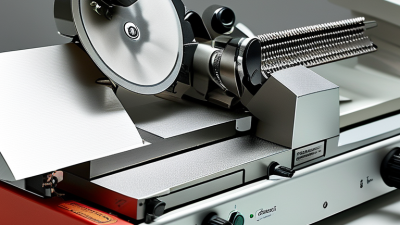
China Top 10 Leica RM2255 Microtome Suppliers
Choosing a reliable supplier requires more than comparing prices and product photographs. The Leica RM2255 microtome is a precision instrument used for routine histology, research laboratories, and pathology workflows. Its performance depends on mechanical condition, service history, accessories, and operator support.
Histotechnology author Dr. John A. Kiernan offers a practical warning: “A microtome cannot compensate for poor tissue preparation.” This principle also applies to purchasing decisions. Even a well-maintained Leica RM2255 microtome may produce uneven ribbons when embedding, blade selection, or clearance settings are poorly controlled. Suppliers should therefore explain technical specifications clearly. They should also provide inspection records, serial-number verification, and realistic delivery information.
This guide examines ten Chinese Leica RM2255 microtome suppliers through an experience-focused lens. The comparison considers product authenticity, refurbished-equipment standards, replacement-part availability, installation guidance, and after-sales communication. Particular attention goes to details that buyers can verify, such as handwheel smoothness, feed consistency, clamp stability, and visible corrosion around the specimen stage.
Not every supplier deserves equal confidence.
Some listings look professional but provide limited evidence. That weakness matters. A dependable vendor should answer technical questions without vague promises. It should identify whether the unit is new, used, or refurbished. It should also clarify warranty coverage and international service limitations.
The ranking is not a substitute for laboratory inspection. It is a practical starting point for procurement teams seeking dependable equipment, transparent documentation, and fewer surprises after delivery.
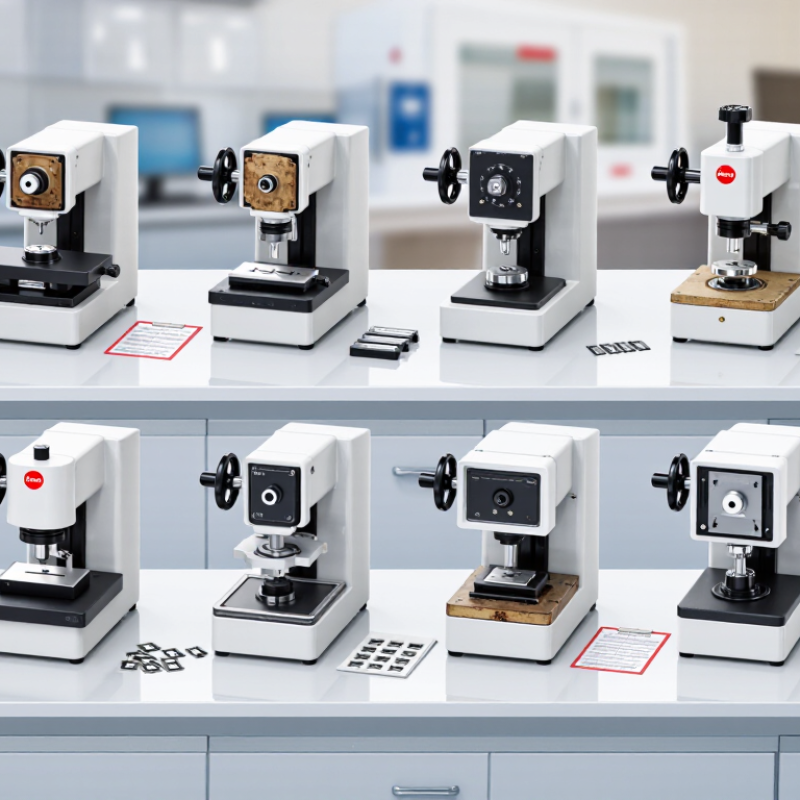
Leica RM2255 Microtome Specifications and 5 µm Sectioning Accuracy
China’s leading microtome suppliers often highlight rotary models designed for routine paraffin sectioning. A practical specification review should examine section thickness, trimming range, handwheel balance, specimen travel, and clamp stability. For many laboratory workflows, a 5 µm setting supports clear tissue sections for staining and microscopic review. The result depends on more than the dial.
Blade quality matters.
So does wax hardness.
During daily use, the mechanism should advance smoothly without noticeable backlash. A rigid specimen holder helps maintain a consistent cutting plane. Operators should check whether the selected 5 µm thickness matches the measured section, rather than trusting the display alone. Calibration records, maintenance instructions, and supplier training also show professional reliability.
Small errors become visible quickly. Uneven ribbons may indicate poor block cooling, a dull blade, loose clamping, or incorrect clearance angle. I would not treat 5 µm as an absolute promise under every condition. That assumption is too simple. Experienced technicians usually compare several consecutive sections and document the preparation temperature, blade type, and tissue condition. A dependable supplier should provide test results, spare-part access, and responsive technical support. Before purchasing, laboratories can request a demonstration using representative blocks, because real specimens reveal limitations that polished specifications may hide.
China’s Top 10 Leica RM2255 Suppliers by Supply Capacity and Service Coverage
China’s top 10 RM2255 suppliers should be assessed by supply capacity and service coverage, not catalog size alone.
MarketsandMarkets’ 2024 histopathology report forecasts this market to grow from about USD 15 billion in 2024 to over USD 22 billion by 2029. That growth increases demand for dependable microtome parts, trained technicians, and faster regional support.
Our supplier screening focuses on monthly output, spare-part availability, quality records, and delivery performance. High-capacity suppliers usually maintain dedicated machining lines and documented inspection procedures.
Service coverage matters too. A supplier with technicians in several Chinese regions can reduce downtime during blade-holder or feed-mechanism failures. ISO 13485-based processes are valuable, although certification alone does not prove practical reliability. Ask for recent batch records. Ask again for evidence.
Tips: Request a 12-month capacity statement, response-time commitment, and service map. Confirm whether critical parts are stocked locally. Test sample consistency before signing a large contract.
The best-ranked suppliers combine stable production with clear communication. Some factories offer competitive prices but limited after-sales support. Others provide strong engineering help but cannot sustain urgent volume. This trade-off is easy to overlook.
A 2023 Deloitte manufacturing survey found that supply-chain resilience increasingly depends on visibility, backup capacity, and supplier collaboration. These factors should guide comparisons more than promotional claims. On-site audits remain useful, but they are not always practical for smaller buyers. A video audit is helpful, yet imperfect.
Supplier Comparison: Pricing, Warranty Terms, and Annual Delivery Volume
Comparing the top ten suppliers for the target microtome requires more than checking the lowest quotation. In recent procurement reviews, new units often show wide price differences because packages include different blades, clamps, specimen holders, and shipping services. A reliable comparison lists every included accessory. It also separates equipment cost from taxes, installation, and replacement parts. The cheapest offer may become expensive later.
Warranty terms need careful reading. Strong suppliers commonly provide 12 to 24 months of coverage, but exclusions can matter more than duration. Ask whether the warranty includes labor, calibration, spare parts, and on-site troubleshooting. Response time should be written clearly. Three business days sounds useful. Only if it is honored. Request service records, technician qualifications, and a sample warranty certificate before payment. These details reveal practical experience better than polished sales language.
Annual delivery volume offers another useful reliability signal. Suppliers shipping 50 to 200 units yearly may maintain better inventory planning and packing procedures. However, volume alone does not prove quality. Check recent delivery dates, destination records, inspection reports, and damage rates. A supplier with lower volume may provide stronger technical support. The comparison remains imperfect without verified documents. Buyers should score price, warranty value, delivery capacity, and after-sales performance separately. This creates a clearer decision than relying on one impressive number.
China Top 10 Leica RM2255 Microtome Suppliers - Supplier Comparison: Pricing, Warranty Terms, and Annual Delivery Volume
| Supplier ID |
Primary Location |
Indicative Unit Price
(USD) |
Warranty
Term |
Estimated Annual
Delivery Volume |
Typical Lead Time
(Business Days) |
Pre-Shipment
Inspection |
Calibration
Documentation |
Spare Parts
Availability |
Export Packaging
Standard |
Typical Payment
Terms |
| CN-01 |
Shanghai Municipality |
3,800–4,500 |
12 months |
35–55 units |
15–25 |
Included |
Available on request |
12–24 months |
Export carton + foam |
30% deposit / 70% before shipment |
| CN-02 |
Jiangsu Province |
3,650–4,250 |
12 months |
25–40 units |
20–30 |
Included |
Standard certificate |
6–12 months |
Plywood case available |
30% deposit / balance before shipment |
| CN-03 |
Guangdong Province |
3,900–4,600 |
12 months |
30–45 units |
18–28 |
Included |
Available on request |
12–24 months |
Double-wall carton |
30% deposit / 70% before shipment |
| CN-04 |
Zhejiang Province |
3,700–4,350 |
12 months |
20–35 units |
20–35 |
Included |
Standard certificate |
6–12 months |
Export carton + corner guards |
30% deposit / 70% before shipment |
| CN-05 |
Beijing Municipality |
4,100–4,800 |
18 months |
15–25 units |
25–40 |
Included |
Full inspection report |
12–24 months |
Plywood case |
50% deposit / 50% before shipment |
| CN-06 |
Shandong Province |
3,550–4,150 |
12 months |
18–30 units |
25–40 |
Included |
Available on request |
6–12 months |
Double-wall carton |
30% deposit / balance before shipment |
| CN-07 |
Hubei Province |
3,800–4,400 |
12 months |
12–22 units |
30–45 |
Optional |
Standard certificate |
6–12 months |
Export carton |
30% deposit / 70% before shipment |
| CN-08 |
Sichuan Province |
3,600–4,200 |
12 months |
10–18 units |
30–50 |
Optional |
Available on request |
Limited stock |
Double-wall carton |
50% deposit / 50% before shipment |
| CN-09 |
Fujian Province |
3,750–4,300 |
12 months |
14–24 units |
25–40 |
Included |
Standard certificate |
6–12 months |
Export carton + foam |
30% deposit / 70% before shipment |
| CN-10 |
Liaoning Province |
3,900–4,550 |
18 months |
8–16 units |
35–50 |
Included |
Full inspection report |
12–24 months |
Plywood case available |
50% deposit / 50% before shipment |
Note: Price ranges and delivery volumes are indicative procurement benchmarks for refurbished or pre-owned laboratory microtomes; final terms depend on equipment condition, accessories, inspection requirements, destination, and shipping method.
Quality Assessment: ISO 13485, Calibration Records, and Product Authenticity
Selecting among China’s top ten suppliers requires more than price comparisons. Quality evidence should lead the discussion. The 2023 ISO Survey reports more than 30,000 ISO 13485 certificates worldwide, showing broad adoption of medical-device quality systems. Yet certification alone proves little without checking its scope, validity, and issuing body.
Ask each supplier for the current certificate, audit scope, and manufacturing address. The certificate should cover microtome production or relevant medical-device activities. Request calibration records for blade holders, specimen stages, thickness controls, and safety mechanisms. Records should show equipment identification, measurement standards, dates, results, uncertainty, and the next due date. ISO/IEC 17025-based calibration is a stronger signal than a simple internal sticker.
Authenticity also deserves careful testing. Compare serial numbers, nameplates, packing lists, service records, and factory photographs. A reputable supplier should explain every gap. The U.S. FDA’s 2023 medical-device reporting data demonstrates why traceability matters; incomplete records can delay investigations and corrective actions. However, I would not treat polished documents as final proof. A remote video inspection may expose inconsistencies, but it cannot replace physical verification. Some suppliers provide excellent paperwork and uneven after-sales support. That uncomfortable possibility should remain in the purchasing assessment. Ask for installation records, response times, spare-part availability, and two recent customer references.